
India's exports are becoming less vulnerable to changes in world demand and exchange rates, according to a publication titled 'Re-examining Narratives: A Collection of Essays', penned by chief economic advisor (CEA) V Anantha Nageswaran and his team. The publication pointed out that this conclusion has been drawn from the fact that there has been a decrease in the income elasticity of exports to 3.44 during 2009-2022, from 5.67 during 1991-2008, and in the inverse price elasticity of exports to 0.4 from 2.7. While a decline in elasticities is favourable in the presence of downside risks such as a decline in global demand and an appreciation of exchange rates, it may not be beneficial during boom periods.

The Sensex will then rally further and end 2016 at 28,000, according to the median forecast of 50 analysts polled in the past week.

Benchmark indices ended on a flat note on Thursday as fag-end selling wiped out intra-day gains amid weak global trends. The BSE benchmark Sensex slipped 8.03 points or 0.02 per cent to settle at 53,018.94. During the day, it had gained 350.57 points or 0.66 per cent to 53,377.54. Similarly, the broader NSE Nifty fell 18.85 points or 0.12 per cent to close at 15,780.25.

The rupee on Friday resumed lower at 60.25 a dollar from previous close of 60.19 at the Interbank Foreign Exchange market.
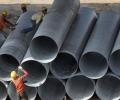
Industrial metals (ferrous and non-ferrous) suffered great volatility once the Ukraine War began in February 2022. First, there was a sharp price rise due to fears of supply disruption, followed by weak global demand. China's weakness and rolling lockdowns have hit production and demand.

Equity benchmark Sensex rebounded 454 points on Thursday, boosted by gains in index heavyweight Reliance Industries amid a positive trend in global markets.

Tracking a recovery in local shares, the Indian rupee on Friday snapped a two-day declining trend and bounced back by 39 paise to end at 61.44 against the Greenback on fresh dollar selling by exporters and some banks.

Indian imports of Russian crude oil may stabilise or even decline in 2024 from record 2023 levels amid shrinking discounts, lower output, and a rebound in West Asian supplies, according to the ship-tracking data and industry executives. This may impact the billions of dollars in annual savings that India made last year. Imports of Russian oil jumped by a record 140 per cent in calendar 2023 to 1.79 million barrels a day (b/d) from 740,400 b/d in 2022, when Russia marched into Ukraine in February, and from just 102,000 b/d in 2021, according to the data from Paris-based market intelligence agency Kpler.

The Indian stock markets started falling from mid-February after reaching an all time high of 14,700-plus.

Tech Mahindra was the top gainer in the Sensex pack, rising over 3 per cent, followed by Dr Reddy's, PowerGrid, Kotak Bank, Sun Pharma, ICICI Bank and M&M. On the other hand, IndusInd Bank, Asian Paints, Maruti and Bharti Airtel were among the laggards.

'India has the potential to do a lot more to take advantage of the time today where we stand to gain, geopolitically and in terms of market attractiveness.'
The S&P BSE 500 index, which accounts for 94% market capitalisation of BSE listed companies, has gained 45% from its March 24 low. However, out of the BSE 500 index stocks, 225 have underperformed the index by gaining less than the broader index during this period.


Reliance Industries Ltd on Friday reported a 27 per cent jump in its September quarter net profit as earnings from the oil and gas business rebounded, and a pick-up in fashion and grocery helped boost retail revenues. The oil-to-retail-to-telecom conglomerate's consolidated net profit of Rs 17,394 crore, or Rs 25.71 per share, in July-September - the second quarter of the current 2023-24 fiscal - was 27.3 per cent higher than Rs 13,656 crore, or Rs 19.92 a share, earning a year back, the company said in a statement. The net profit was also higher quarter-on-quarter compared to Rs 16,011 crore earnings in the preceding three months ended June 30.

With sentiment for the automotive (auto) sector turning positive, stocks of two-wheeler auto majors have been hitting their 52-week highs. Hero MotoCorp, Bajaj Auto, TVS Motor Company, and Eicher Motors recently reached their yearly highs on strong sales in the festival season and the expectation of faster growth rates ahead. Since the start of this month, listed two-wheeler majors have delivered returns in the 12-17 per cent range, compared to the 7 per cent gains for the S&P BSE Auto Index and 3 per cent for the benchmark S&P BSE Sensex.

'This market is very expensive in some pockets, dirt cheap in some, and the belly of the market is reasonably valued.'

The market capitalisation of BSE-listed companies jumped to a record high of Rs 2,40,04,664.28 crore on Tuesday, driven by a rally in stocks that also saw the benchmark Sensex touching its lifetime peak of 53,887.98 points. Rallying for the second consecutive day on Tuesday, the 30-share BSE index closed at a fresh closing peak of 53,823.36 points, a jump of 872.73 points or 1.65 per cent. During the day, it zoomed 937.35 points to 53,887.98 points.

The rupee on Friday rebounded from the near-80 levels to close higher by 17 paise at 79.82 against the US currency following a recovery in the domestic stocks and weakness in the greenback in overseas markets. The US dollar retreated from the two-decade high levels against a basket of six currencies which supported the rupee sentiment. At the interbank foreign exchange market, the local currency opened at 79.95 and witnessed an intra-day high of 79.82 and a low of 79.96 against the US dollar in the day trade. ,
Markets ended lower, amid weak global cues, on profit taking and February IIP data due later today.

Fitch Ratings on Monday said it expects a moderately worse sector outlook for Indian banks for the next fiscal beginning April 1 based on muted expectations for new business and revenue generation, and deteriorating asset quality. Fitch believes that the disproportionate shock to India's informal economy and small businesses, coupled with high unemployment and declining private consumption, have yet to fully manifest on bank balance sheets. The rating agency said the impact of the COVID-19 pandemic is likely to pose challenges to Indian banks' improving financial performance once asset-quality risks manifest in the financial year ending March 2022.

Oil & gas, banking and pharma sector stocks stole the show

The BSE Midcap ended up 0.5% while the Smallcap index ended nearly 1% higher

Mutual funds (MFs) are set to be net sellers of Indian equities for the first time in the past seven financial years, having sold stocks worth about Rs 1.27 trillion so far in 2020-21 (FY21), making it the highest net sales on record in a financial year. MFs had been net buyers in the previous six financial years, including purchases of over Rs 1.41 trillion in FY18, Rs 88,152 crore in FY19, and Rs 91,814 crore in FY20. The last time they offloaded Indian equities was in FY14, when they net sold stocks worth Rs 21,159 crore. In contrast, foreign portfolio investors (FPIs) have ramped up buying in FY21, purchasing more than Rs 2.6 trillion worth of shares.

The value of the foreign portfolio investors' (FPI) holdings in the domestic equities reached $667 billion in three months ended September 2021, a surge of 13 per cent from the preceding quarter, according to a Morningstar report. This was largely on the back of strong performance by the Indian equity markets along with net inflows from FPIs at the later part of the quarter. "At the end of the quarter ended September 2021, the value of FPI investments in Indian equities shot up sharply to $667 billion, which was considerably higher than the $592 billion recorded in the previous quarter, a spike of around 13 per cent," the report noted.

'When the gold price rises rapidly, India's physical gold market remains on standby.'

A downturn in Indian demand could hit global gold prices.

The resilience of many emerging markets, notably China and India, in the aftermath of the Lehman shock further strengthened this sense of manifest destiny.

The 30-share Sensex ended up 1 point at 27,459 and the 50-share Nifty ended down 1 point at 8,341.

Benchmark stock indices rebounded around 1 per cent on Thursday following value buying in banking, IT and auto stocks after two days of losses and a largely positive trend in global markets. The 30-share BSE Sensex climbed 659.31 points or 1.12 per cent to settle at 59,688.22. During the day, it jumped 683.05 points or 1.15 per cent to 59,711.96. The broader NSE Nifty rose by 174.35 points or 0.99 per cent to close at 17,798.75.

Equity indices failed to hold on to their gains in see-saw trade on Tuesday, ending in the red for the third straight session despite a tentative recovery in global equities. The rupee too bounced back from historic lows, but the overall sentiment remained risk-averse amid concerns over economic recovery in a high interest rate scenario. The 30-share BSE Sensex had a choppy start but gained momentum in mid-session trade. However, it succumbed to selling pressure towards the fag end to close 105.82 points or 0.19 per cent lower at 54,364.85. On similar lines, the broader NSE Nifty declined 61.80 points or 0.38 per cent to finish at 16,240.05.

SBI was the top loser in the Sensex pack, shedding around 3 per cent, followed by Kotak Bank, IndusInd Bank, NTPC, ICICI Bank, Axis Bank and HDFC Bank. On the other hand, HUL, ITC, L&T, Bajaj Finserv and Tech Mahindra ended with gains.

In the past few years, MFs have emerged as significant institutional buyers, often offsetting the selling by FPIs.

'It will be best for investors to have a systematic investment plan in mid-cap and small-cap funds with a three-/five-year horizon.'

The automobile sector has started seeing volume growth, the crucial economy segment included. Maruti Suzuki India (MSIL) could be a big beneficiary as the country's largest passenger vehicle (PV) maker has seen several favourable developments including volume recovery. Demand for its new sports utility vehicles (SUVs) appears to be good, and the company has 4 lakh outstanding orders by April 2023, (up from 3.6 lakhs in January 2023). Siam (Society of Indian Automobile Manufacturers) estimates that passenger vehicle demand would grow by 5-7 per cent in the 2023-24 financial year (FY24) and MSIL is likely to beat the market growth.

Private equity (PE) investment in real estate declined 5 per cent year-on-year in April-June to $1.9 billion because of high interest rates, according to Anarock. PE inflows stood at $2 billion in the year-ago period. Real estate consultant Anarock has come out with a report titled 'FLUX Q1 FY24 Market Monitor for Capital Flows in Indian Real Estate'.

Yes Bank was the biggest gainer in the Sensex pack, rallying 10.94 per cent. Other gainers included Sun Pharma, IndusInd Bank, L&T, ICICI Bank, Maruti, Bajaj Auto, Tata Motors and ONGC, rallying up to 4.01 per cent.

Marc Faber, legendary contrarian investor and author of The Gloom, Boom & Doom Report, talks to Jitendra Gupta on recent market correction, road ahead for Indian markets, global economic recovery and whether there is a bubble in China or not.

IndusInd Bank was the top gainer in the Sensex pack, zooming around 8 per cent, followed by PowerGrid, Dr Reddy's, Sun Pharma, NTPC and Axis Bank. On the other hand, UltraTech Cement, Maruti, ITC, Kotak Bank and Asian Paints were among the losers.
Indian shares may not be able to build solid gains on last week's relief rally as concerns surrounding slowing growth in Asia's third-largest economy and lingering worries over euro zone debt crisis will continue to temper investors' enthusiasm.

Kotak Bank was the top gainer in the Sensex pack, rallying over 8 per cent, followed by TCS, Infosys, ICICI Bank, HCL Tech and ONGC. On the other hand, Titan, HUL, PowerGrid, NTPC and Nestle India were among the laggards. NSE Nifty advanced 126.60 points, or 1.38 per cent, to settle at 9,313.90.
